

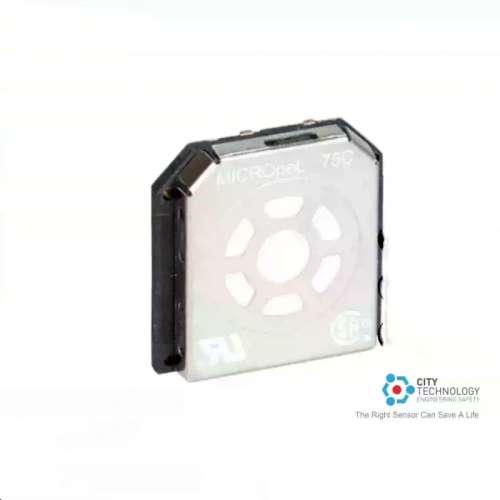
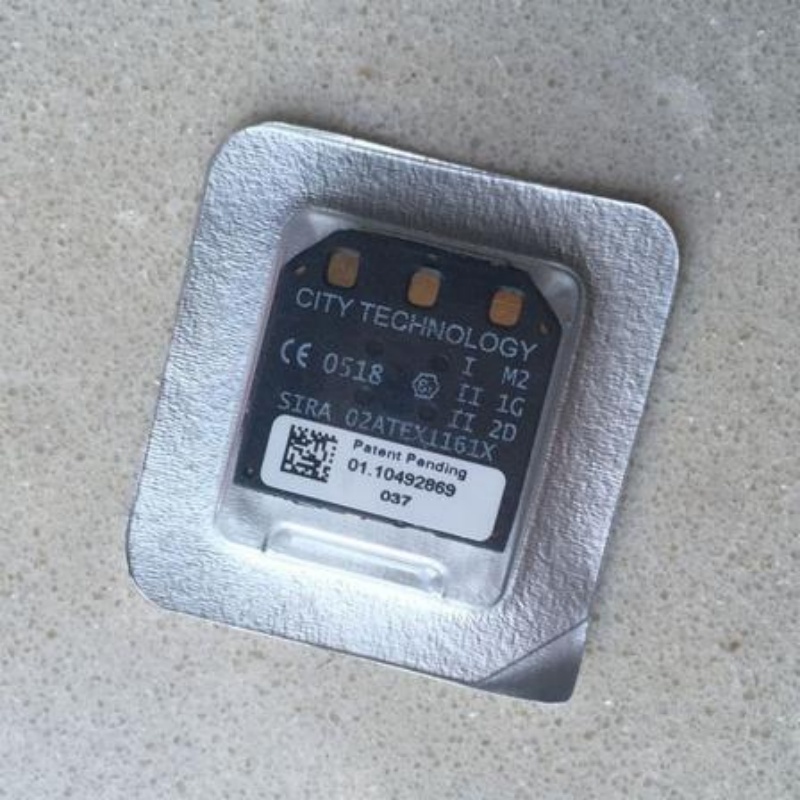
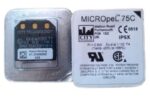
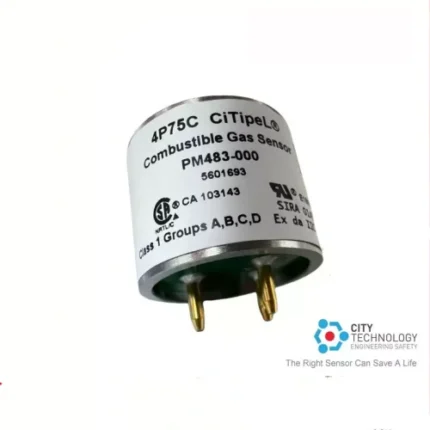
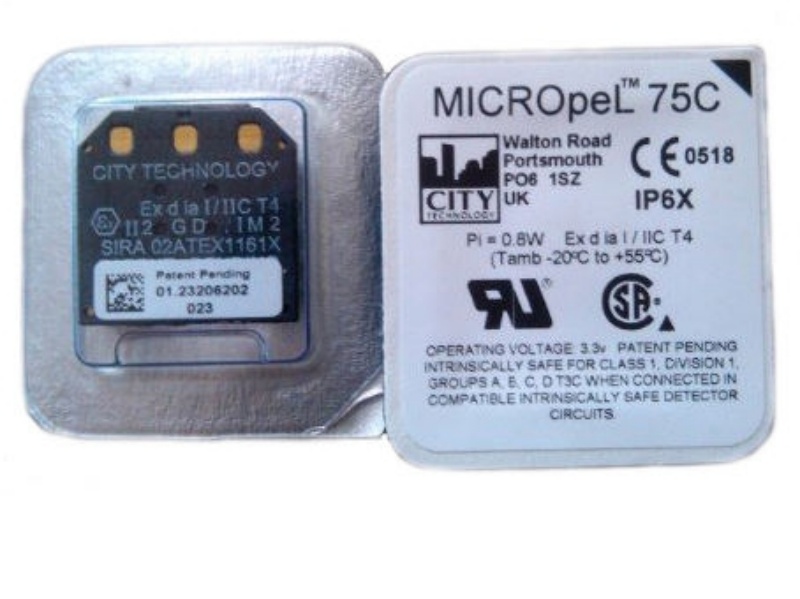
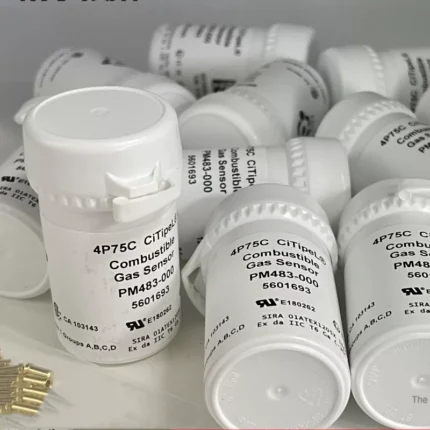
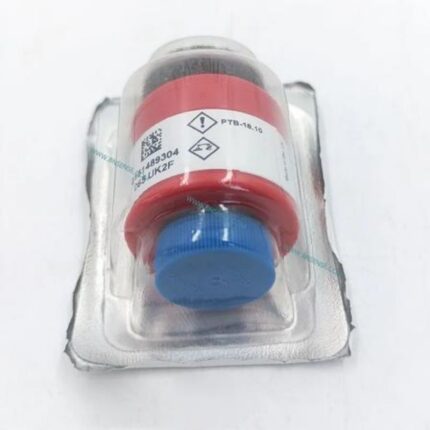
CITY MICROPEL 75 75C PM759-000 PM769-000 Combustible Gas Sensor
Specifications
Brand: City
Model: 75, 75C
Principle: Catalytic oxidation (Pellistor), used to detect the lower explosive limit (LEL) of combustible gases
Origin: UK
1. Detection Performance
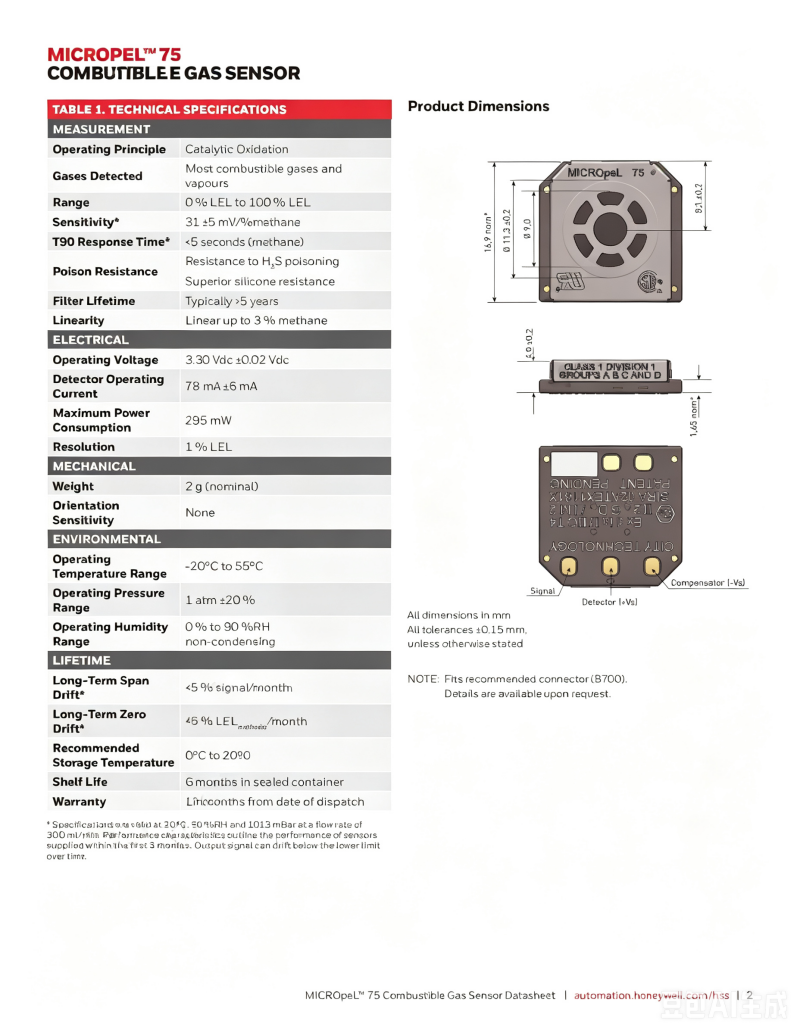
Range: 0~100% LEL (Methane 0~5% VOL)
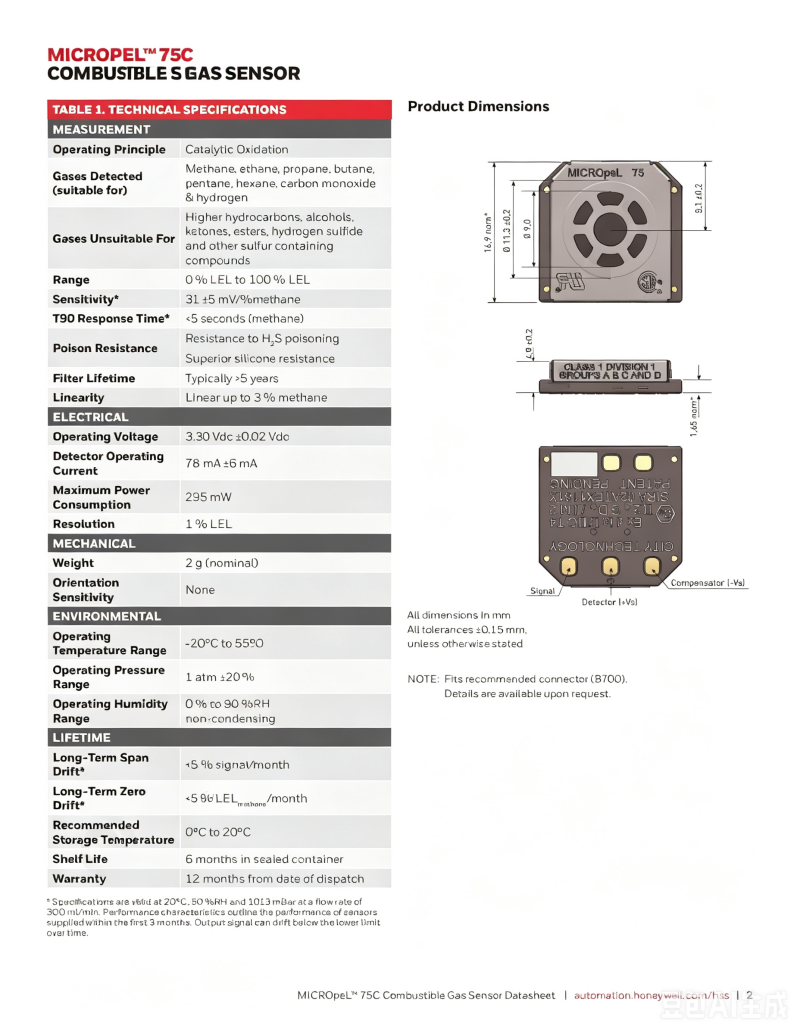
Target gases: Methane, ethane, propane, butane, hydrogen, CO, and other light combustible hydrocarbons
Not suitable: Heavy hydrocarbons, alcohols, ketones, esters, high-concentration H₂S
Sensitivity: 31±5 mV / % methane
T90 response time: <5s (methane)
Linear range: Excellent linearity within 0~3% methane
Resolution: 1% LEL
Poison resistance: Enhanced resistance to silicone and hydrogen sulfide; filter total capacity 1000 ppm·hr H₂S
Filter lifespan: >5 years under normal conditions
2. Electrical Parameters
Rated supply: 3.30 VDC ±0.02V
Operating current: 78±6 mA
Max power consumption: 295 mW
Structure: Dual bead (Detector & Compensator), 3-pin output
3. Environmental & Mechanical
Operating temperature: -20℃ ~ 55℃
Humidity: 0~90% RH, non-condensing
Pressure: Standard atmospheric ±20%
Weight: 2g
Mounting: No directional sensitivity, can be used at any angle
Housing: 316 stainless steel, IP6X protection
4. Lifespan & Drift
Expected lifespan: 5 years in air
Long-term span drift: <5% signal/month
Zero drift: <5% LEL methane/month
Key Differences Between 75 and 75C
75C adds a dedicated H₂S filter layer, greatly improving lifespan in sulfurous and silicone environments; standard 75 has no enhanced filter, easy to get poisoned
75C has full ATEX/UL explosion-proof certification, suitable for industrial explosion-proof equipment; 75 has simplified certification
75C is the standard for portable four-in-one/two-in-one gas detectors (BW, Honeywell)
Typical Applications
Portable multi-gas detectors (LEL combustible channel)
Natural gas and pipeline leak inspection instruments
LEL monitoring in underground pipelines, ship cabins, gas stations, chemical workshops
Confined space safety checks
Usage Notes
Must be paired with a 3.3V constant voltage driver circuit; do not directly supply 5V, which will destroy the catalytic bead
Silicone glue, silicone oil, and high-concentration H₂S can permanently poison the catalytic bead; avoid on-site exposure
Long-term high temperature/high humidity condensation accelerates zero drift; calibration recommended every 3~6 months
Sensor cannot be disassembled, internal lead acetate filter layer poses contact hazard if damaged
Sensitivity slightly decreases below 0℃; low-temperature use requires software compensation
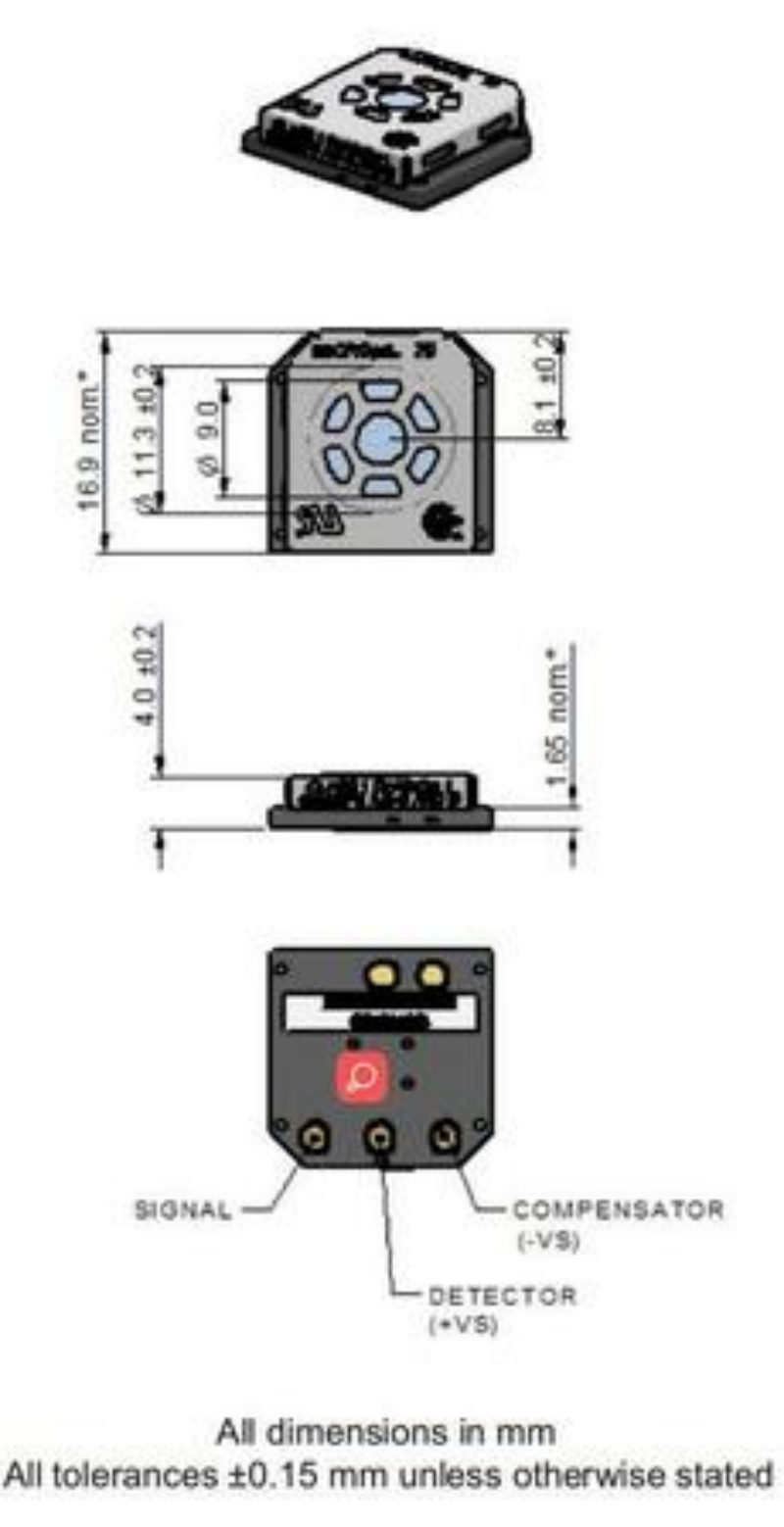
Pin Definition (3Pin)
DETECTOR: Detector bead
COMPENSATOR: Compensator bead
V: 3.3V supply positive
Reviews
There are no reviews yet.